The best way to learn how to get rid of old furniture is to check each item's condition, reuse safe pieces, and plan removal before moving day. You may donate, sell, give away, recycle, or arrange bulky-item collection. The right choice depends on size, timing, access, and local rules.
Moving can feel like a fresh start, but clearing old furniture can be hard. Some items hold memories. Others are too worn, large, or damaged for the new home. A simple plan helps homeowners, tenants, and business owners make choices without rushing.
Athens Movers can help people plan how to move useful furniture and remove pieces that will not fit. The best choice depends on the item's condition, who may use it, and what local rules allow.
Table of Contents
- What is the best way to get rid of old furniture?
- Can old furniture be donated or given away?
- How can you sell or give away furniture locally?
- Can old furniture go in the trash?
- How should you dispose of large or unwanted furniture?
- How much does it cost to get rid of old furniture?
- How do you choose the right furniture removal option before a move?
- Frequently Asked Questions
What is the best way to get rid of old furniture?
The best choice starts with an honest look at the furniture. Clean, safe, useful pieces may help another person. Broken, stained, unsafe, or badly damaged items may need recycling or proper disposal.
Decide whether the furniture can be reused
Look for strong frames, working drawers, clean fabric, and stable legs. Check for odors, pests, mold, water damage, sharp edges, and loose parts. A piece does not need to look new, but it should be safe for another person.
Measure the item before making a plan. A sofa may fit through a front door but not through a narrow stairway. Large desks, wardrobes, and bed frames may need careful lifting or partial disassembly. Take clear photos and note any damage.
Furniture that is still useful can be donated, sold, or offered to someone nearby. A worn item may still work in a workshop or storage room. Do not pass on broken furniture just to avoid disposal.
Match the item with the right removal option
Choose the next step based on condition, size, and time. Common choices include:
- Donate clean furniture that meets an organization's rules.
- Sell useful pieces with honest details and clear photos.
- Give items to neighbors, friends, or local groups.
- Recycle parts when the material is accepted.
- Arrange bulky-item collection for furniture that cannot be reused.
- Hire Furniture Movers when heavy lifting or tight access creates a safety risk.
A good plan may use more than one choice. You might donate chairs, sell a dining table, and arrange removal for a damaged sofa. This keeps useful items in use and cuts down on last-minute work.
Can old furniture be donated or given away?
Old furniture can often be donated or given away when it is clean, safe, complete, and free from pests or serious damage. Each group has its own rules, so ask before loading the item or arranging pickup.
What donation organizations usually accept
Many donation groups want furniture that another household can use right away. Common items include clean tables, chairs, dressers, shelves, bed frames, and sofas in good condition. Some groups may not accept mattresses, stained upholstery, broken items, or pieces with missing parts.
A donation center may also limit large pieces because of storage space or truck size. Some groups offer pickup in selected areas. Others ask donors to bring items in. Pickup times may be limited, which matters when a move is close.
Check the current acceptance list before choosing a group. Ask whether it takes the exact item, handles stairs, and needs the furniture placed outside. Clear answers help prevent a failed pickup.
How to prepare furniture for donation or pickup
Clean the piece and remove personal items from drawers, shelves, and cushions. Tighten loose screws if it is safe. Remove legs or shelves only when the group allows it and all parts can stay together.
Protect corners during handling. Keep keys, hardware, and assembly instructions with the furniture. If the item has a mark or repair, explain it before pickup. Honest details help the next owner make a good choice.
Do not leave furniture outside in rain or snow if it may be damaged. Wet or ruined furniture may no longer qualify for donation. A planned pickup is safer than placing a large item near a road or walkway.
How can you sell or give away furniture locally?
Furniture can be sold or given away through neighborhood groups, online listings, community boards, and personal contacts. A clear listing helps the right person decide quickly and cuts down on messages before moving day.
What information to include in a listing
Name the item, give its size, and explain its condition. Include the material, color, age when known, brand when useful, and any wear. Say whether the buyer or recipient must handle pickup.
Use bright, honest photos from several sides. Show stains, scratches, missing hardware, and repairs. Include labels or model information when that may help. A short, true description builds more trust than a claim that the piece is perfect.
Mention the deadline if the furniture must leave before a move. Do not share private details about the home. Use a safe platform when possible, and avoid posting personal contact details in a public listing.
How to arrange safe collection or delivery
Set a pickup time when another adult can be present. Keep the item near the entry only if it will not block doors, stairs, or walkways. Do not let an unknown person walk through the home alone.
Large furniture may need two or more people, moving blankets, straps, and a safe vehicle. A tall cabinet or heavy sofa can cause injury if one person moves it without help. Loading & Unloading Help may help someone who has a vehicle but needs safe lifting support.
Ask the recipient to bring the right vehicle and enough help. If the item must be delivered, protect walls, floors, doors, and stairs. Even a short local handoff needs careful planning.
Can old furniture go in the trash?
Old furniture cannot always go in a regular household trash bin. Local rules may require special collection, a transfer station, a recycling program, or another approved option for bulky items and certain materials.
Why furniture may require special collection
Furniture is large, heavy, and hard to compact. A sofa, mattress, cabinet, or table may not fit safely in a bin or truck. Items left beside a bin may be skipped or treated as illegal dumping.
Some furniture contains materials that need separate handling. Upholstery, treated wood, glass, metal, foam, and electronic parts may follow different rules. A powered recliner or desk with built-in electronics should not be treated like plain wood.
Furniture with mold, pests, broken glass, or sharp metal needs extra care. Keep unsafe items away from children and pets. Do not burn painted, treated, or upholstered furniture, since smoke and ash can create hazards.
How to check local disposal rules
Start with the local city, county, or waste service website. Search for bulky-item collection, large-item disposal, furniture recycling, and transfer station rules. Look for accepted materials, collection days, placement instructions, and limits.
Rules can differ between nearby communities. Tenants should also check building manager instructions. Some apartment communities have set areas for large items and may ban furniture near shared bins.
Keep proof of any scheduled collection when required. Place the item where the service directs, but do not move it outside too early. If rules are unclear, ask the waste provider first.
How should you dispose of large or unwanted furniture?
Large or unwanted furniture should go through a planned option that fits its condition and local rules. Reuse comes first when safe. Damaged items should go to an approved bulky-item, recycling, or disposal service.
Furniture removal and bulky-item collection options
A local waste provider may collect large furniture on a set day. Some communities direct residents to a drop-off site or transfer station. Recycling centers may accept metal frames, untreated wood, or other parts, but rules vary.
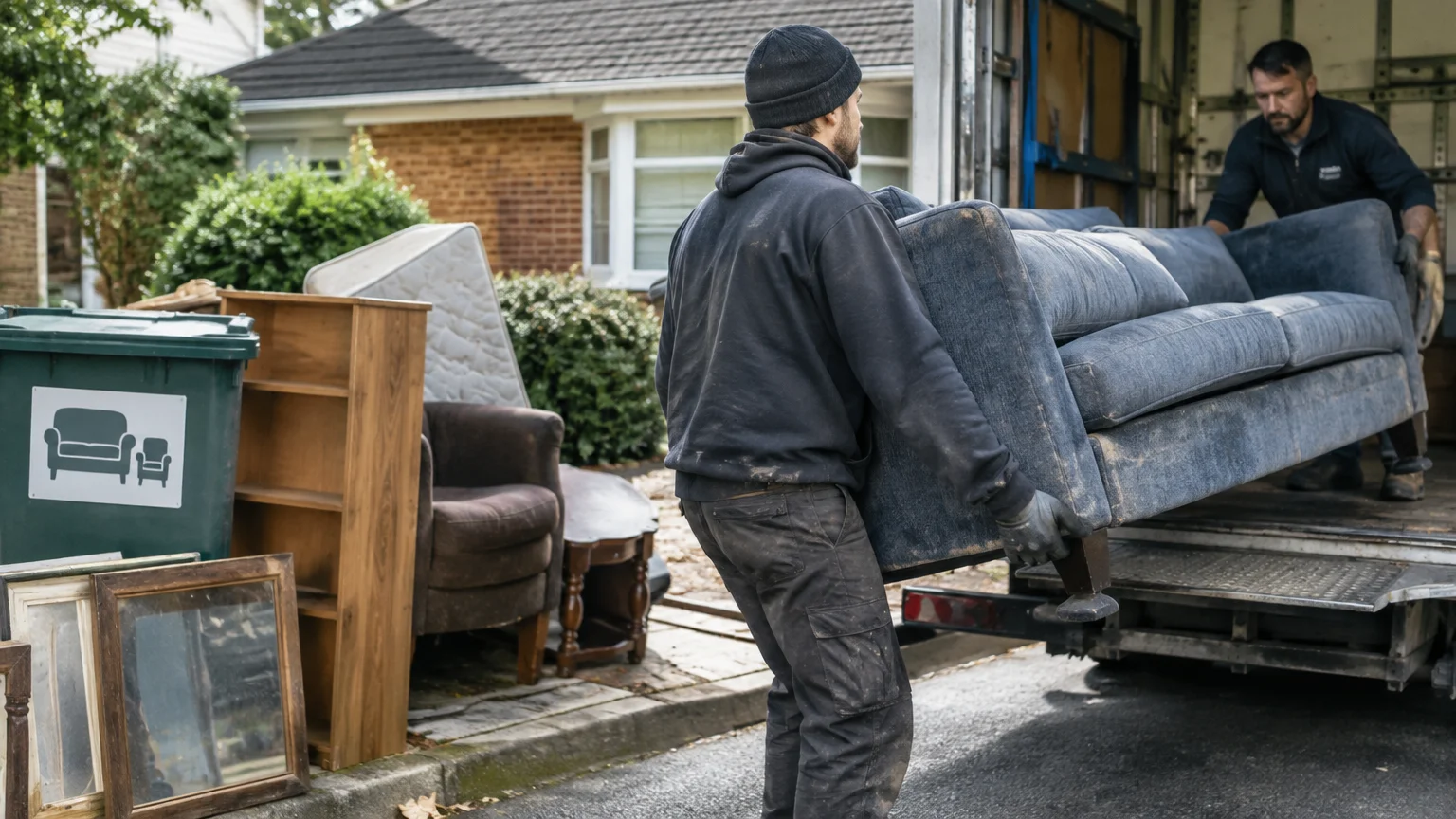
A professional removal team may help when an item is heavy, the home has stairs, or the owner cannot load a vehicle safely. Furniture Movers can help with lifting and transport. Local Movers may also help a household clear furniture before loading items for the new home.
Apartment residents and office managers should plan around shared spaces. Commercial & Office Movers can help businesses separate unwanted desks, chairs, storage units, and equipment from items needed at the new location. This can reduce delays during an office move.
What to do when the item cannot be reused
First, remove loose parts and secure sharp edges when safe. Keep glass separate if local rules require it. Do not break apart heavy furniture unless you have the right tools, space, and safety plan.
Then confirm the proper destination. A damaged sofa may need bulky-item collection. A metal filing cabinet may go to a recycler. Furniture with electronic parts may need a special drop-off site.
Never abandon furniture in an alley, empty lot, hallway, or shared outdoor space. Illegal dumping harms the area and may cause injury. Planned removal keeps the property clear and gives you a record of where the item went.
How much does it cost to get rid of old furniture?
The cost of removing old furniture depends on size, weight, number of pieces, access, distance, labor, and disposal needs. Donation, resale, local collection, and paid removal may compare differently. The final cost is confirmed on a quote.
What affects the overall removal cost
A small table on the ground floor is usually simpler to handle than several large items in a narrow apartment. Stairs, elevators, long carries, tight turns, and limited parking can add time and labor. Heavy wood, sleeper sofas, and large cabinets also need more care.
Disposal needs matter too. Reusable furniture may have more options than damaged or contaminated items. A team may need to sort materials, visit a proper disposal site, or handle special items under local rules.
A clear quote should reflect the full job. Describe the furniture, share photos when asked, and explain stairs, elevators, access limits, and timing. Athens Movers can review those details for Athens residents who need help planning removal before a move.
How furniture removal compares with donating or hauling it yourself
Donating or giving away furniture may reduce what must be hauled, but finding a recipient and arranging pickup takes time. Selling may take longer because interested people may cancel or lack a suitable vehicle.
Hauling furniture yourself may work when the item is light, the route is simple, and the vehicle is suitable. It may not be safe for heavy pieces, stairways, fragile walls, or one-person moves. Professional help may be easier when time is short or injury is a concern.
The best choice is not always the one with the fewest steps. It is the option that safely clears the property, follows local rules, and protects the moving schedule.
How do you choose the right furniture removal option before a move?
The right option matches the furniture's condition, the move date, home access, and local disposal rules. A short plan helps clear the home before movers arrive and keeps unwanted items from blocking the move.
Create a plan based on timing, condition, and access
- Make a furniture list. Record each item, its condition, size, and final destination.
- Separate keep, reuse, and dispose piles. Mark what will move, what may be donated or sold, and what needs disposal.
- Measure difficult items and pathways. Check doors, stairs, elevators, halls, gates, and parking access.
- Set deadlines for reuse. Give donations, listings, and giveaways enough time before moving day.
- Confirm local disposal rules. Check collection dates, accepted materials, and placement instructions.
- Book help for heavy or risky items. Arrange support before the home fills with boxes.
- Recheck the space. Walk through rooms, closets, garages, and storage areas before moving.
Keep a small buffer before moving day. Waiting until the last hour may leave fewer donation and collection choices. Early planning also gives the moving team a clear path through the home.
Key takeaways for clearing out furniture before moving
- Reuse safe furniture first through donation, sale, or a local giveaway.
- Check local rules before placing large items with household trash.
- Describe damage honestly in every listing or donation request.
- Plan for stairs, weight, and narrow spaces before moving heavy pieces.
- Use professional help when lifting may cause injury or property damage.
A careful plan helps a household leave unwanted furniture behind without a last-minute problem. Athens Movers serves Athens and can help owners think through furniture moving and removal needs. Contact us to request a quote and discuss the items that need attention before the move.
Frequently Asked Questions
Can furniture with small stains be donated?
Donation rules differ, but many groups want furniture that is clean and ready for use. Small marks may be accepted by some groups, while stains, odors, pests, mold, or major damage may lead to refusal. Describe the condition and confirm acceptance before arranging pickup.
Is it better to sell furniture before moving?
Selling can work well when furniture is useful, in good condition, and there is enough time to find a buyer. Use clear photos, list measurements, describe flaws, and set a firm pickup plan. If time is short, donation or planned removal may be simpler.
Can a sofa be placed beside a regular trash bin?
Usually, a sofa should not be placed beside a regular bin without checking local rules first. Many waste services require bulky-item collection or delivery to an approved site. Leaving it outside without permission may create a safety problem and may break disposal rules.
What should happen to furniture that cannot be donated?
Furniture that cannot be reused should match the correct disposal or recycling option. Check bulky-item collection, transfer stations, material recycling, or professional removal. Items with mold, pests, broken glass, or sharp metal need extra care and should not be passed to another household.
Should someone hire help to remove heavy furniture?
Professional help is not needed for light items that can be moved safely with good footing and a clear path. Heavy furniture, stairs, tight turns, fragile walls, and limited help can change that. Professional Furniture Movers or Loading & Unloading Help may lower the risk of injury and damage.
If you are unsure what to do, have the item reviewed before it becomes a larger moving task. Athens Movers can help you understand the safest next step.
If you are not sure what you are dealing with, it is worth having someone look at it before it turns into a bigger job. Get in touch with Athens Movers today and we will tell you where you stand.